

Why There\’s a \”Trust\” in Trustee, Part 2

In Part 1 of this series, I discussed why one should be careful in selecting a trustee. Family members are often considered the most trustworthy with respect to family matters, so people typically select them as trustees. However, this endearing gesture can cause serious problems later: Trust assets could be inadvertently wiped out. A trustee is usually responsible for managing the trust assets. If the trust is significant, the trustee should either have the required financial investment background or the ability to wisely choose someone with the needed background to act as the trust investment advisor. If the trustee is not well informed about investment matters relevant to the trust assets and does not employ someone who is, then the trust funds could dissipate leaving the terms of the trust unfulfilled, and probably one or more displeased beneficiaries. This last point is particularly important if the trust isn’t large, but the beneficiaries depend on its income for health and educational support, for example. Valid claims could go unanswered; or a trust claim could be ignored. The trustee is responsible for responding to or initiating litigation on behalf of the trust. So if a long lost family member who would have been provided for had their whereabouts been known, emerges claiming they should receive under the trust, the trustee should properly address that claim. If the trustee is a family member, however, the problem becomes one of bias against that claim because a valid claim could dilute the current beneficiaries’ shares, possibly including the trustee’s share. Another problem is that it takes time to respond to these claims, time that a family member may not have. Equally important is a trust may have a claim that needs to be litigated. But, if the trustee does not recognize the claim issue, a potential financial award for the beneficiaries may go unnoticed. Co-trustees don’t always agree. While the grantor may have gotten along well with both individuals, when it comes time to make a distribution decision or another decision involving the trust, the co-trustees may not see eye-to-eye and both could have valid perspectives. This type of disagreement starts many long-term family arguments resulting in costly court battles. If nothing else, by choosing a corporate fiduciary, the family will be at peace with each other and at war with someone else. Trust administration responsibilities are time consuming and numerous. The following is an incomplete list of trustee duties: Distributing beneficiary shares Providing a regular accounting to beneficiaries Paying debts, taxes, fees and expenses associated with the trust administration Giving notice to guardians or legal representatives of beneficiaries who are minors or incapacitated Executing documents required for trust administration Settling claims against the trust, not just from possible beneficiaries but from estate creditors Buying insurance for trust assets Perhaps now you’re thinking that a Last Will and Testament may circumvent this “trustee” matter, but that\’s not necessarily true. A Will’s executor or “personal representative” often has the same responsibilities as a trustee. So, establishing a Will not only requires delegation to the executor some of the responsibilities above, but in Illinois, it also entails more costs and more time because of probate. Therefore, it is critical to resist the urge to select a family member as a trustee – or executor – without first giving the decision the thought and discussion it deserves.
What the Illinois Civil Union Act Means . . . to Many

I apologize because today’s blog was supposed to be about why caution in choosing a trustee is important. However, recently I’ve received a number of questions regarding the affects of the Illinois Civil Union Act. Now that the fact that people are free to join who they want in the legal status of a loving union has sunk in some, questions and issues are surfacing. Individuals, not just from the LGBT community, but from other corners of humanity are interested and want to know more. Additionally, a business boom has started, which I think is a good thing, but I’m going to address a few questions first. Q: My boyfriend and I live together [heterosexual couple] and are considering a civil union now and getting married later, how are civil unions dissolved? A: Civil unions are dissolved just like a divorce, so it’s probably not worth it for heterosexual couples to enter into a civil union and then get divorced in order to get married. Q: What are the practical implications for LGBT couples? A: LGBT couples in Illinois, and states that recognize civil unions as legally equivalent to marriages, have all the benefits and obligations of married couples in state. Because the federal government does not recognize civil unions, (see Defense of Marriage Act, a.k.a., DOMA, which archaically defines marriage as a union between a man and a woman) a multitude of benefits – about 1,138 if an LGBT couple resides in Illinois – are provided through the federal government and, as a result, are not available to partners in a civil union. Likewise, if an LGBT couple travels to a state that doesn’t recognize the union, benefits that are available in Illinois, such as a spousal share through our intestacy code or rights to visit a partner in intensive care, would not be available in that state. Q: What couples benefit the most from the Civil Union Act? A: Elderly couples on Medicare who had to live independently from each other because living as a couple would jeopardize their benefits, can now be together as a civil union and maintain their benefits for the very reason partners of most civil unions can’t enjoy federal benefits – their union isn’t recognized by the federal government. Q: What about domestic partnerships in Illinois? A: The Illinois domestic partnership registry is no longer open and domestic partners are encouraged to obtain a Civil Union certificate. Now, a bunch of businesses are booming (well … seeing a significant increase of revenues; I couldn\’t resist the alliteration): The Civil Union Act has brought divorce lawyers an entire new market. But let’s hope that particular fruit of this tree for my colleagues won’t ripen for a while. Civil Union ceremonies require flowers, catering, music, officiants – all the things that weddings would – at least for those partners who want that type of celebration. (For some reason the baby shower of an episode of the Real Housewives of Atlanta springs to mind.) So the hospitality industry is very happy with the new law. P.S. I can recommend a great officiant if you need one – she may even toss in a Celtic hymn if she really likes you! Computer programmers and organizational gurus are enjoying themselves as well because systems and forms have to be replaced or upgraded. So, the Illinois Civil Union Act has ultimately placed a lot of smiles on citizen’s faces. Now, if Congress would just repeal DOMA. Thanks for allowing the digression. Part 2 of \”Why There\’s a Trust in \”Trustee\” will be available next week.
Why There\’s a \”Trust\” in Trustee, Part 1 of 2
Trust and Estates 101: No trust will fail because it doesn’t have a trustee. Thus, if a trust creator (\”settlor\” or \”grantor\”) doesn’t designate a trustee but has a beneficiary, the court will appoint a trustee for the beneficiary. Why? Because the beneficiary must be able to hold someone accountable in court if the terms of the trust aren’t met. So, the trustee has an obligation to the beneficiary or, in legal terms, the trustee is in a fiduciary relationship with the beneficiary. As a fiduciary, the trustee is held to a high standard of duty to the trust and primary beneficiaries. A trustee must act wisely with respect to the trust assets, managing them to both preserve and, if possible, grow the assets. The trustee can\’t use the assets for their own benefit, even if they are also a beneficiary, without consent from the other beneficiary or beneficiaries. Additionally, the trustee can\’t give the beneficiary’s rights to receive the assets to someone else unless the terms say otherwise. Example: If the Trust terms say only Beneficiary Barbara can receive a Trust distribution, Collector Carter shouldn\’t receive a distribution without a court order. The right to receive that distribution belongs to Barbara only. Finally, if the trust has multiple beneficiaries, the trustee can\’t favor one beneficiary’s needs over the other unless, again, the trust dictates such. This is one reason why, occasionally, bank trustees (\”corporate fiduciaries\”) are often preferred over close friends or family members. And it\’s also why family members sometimes refuse to act – they don\’t want to subject themselves to a potential lawsuit. Therefore, a trustee should be someone the settlor thinks will be loyal to the terms of the trust and not compromised by a relationship with a beneficiary, or a creditor for that matter. This is also why considerable thought should be given to who you name as trustee. Part 2
11 Truths about Trusts, Part 2 of 2

In Part 1, of this series, I explained how disclosing information about legal services benefits clients, namely by helping you save money. For me and my colleagues, the benefit comes in happy clients, more clients, and less stress. So, to continue gently pulling back Mr. Wizard’s curtain, the following are the last 6 of the 11 truths. Trusts are for old folks with lots of money. Truth: Trusts are also for young folks who have loved ones they want to protect, e.g., new partners, newlyweds, and children. My trust will not be affected if I move to another state. Truth: It depends. The document itself is not really affected unless it specifies a choice of law, and most do. This may be problematic because if you’re no longer in the state where the trust was created, the judge may consider it a jurisdictional problem. However, this can be easily remedied by amending the trust to reflect your current residency. Still, you might want to consider the valuation of the asset distribution with respect to state estate and gift taxes. Another challenge may also arise if you’ve moved from an equitable distribution state, like Illinois, to a community property state. Bank or corporate trustees are generally unnecessary. Fact: Bank or corporate trustees are generally very necessary for 2 reasons. First, they can be considered a neutral party so that if family members question a particular distribution term of the trust, the dispute is with someone outside the family, which helps maintain family harmony. Second, institutional trustees are often more financially savvy than family members. Now, there is, of course, a cost to having this peace of mind. Yet, small banks may be more willing to assist families with small trusts. (Thank you to my colleague, Ray Prather of Prather Ebner LLC.) Having an attorney review my DIY trust is unnecessary because the entities holding the assets determine its legitimacy. Truth: Yes, the banks and other entities that are asset-holders have the final ‘say-so’. But if they say, “Yes,” are they really correct? Consider this: Your trust only provides for your named children. The bank says the trust is valid and technically it is. Then later, you adopt or have another child but you don’t change the trust. The later child will be at the mercy of the trustee and the court. Attorneys are trained to ask questions related to these types of situations, which you may not consider when writing the trust yourself. You’ve already saved yourself money by drafting the document yourself. Allowing an attorney to review it in earnest, not just take your list through an auto-checklist like an auto-car-wash will also save your family money and potential heartache. Wills must go through probate. Truth. Most wills do go through probate. On the other hand, in Illinois, if the estate is less than $100,000, it is considered a small estate and in certain circumstances, probate may be waived. Moreover, if you have a trust with a pour-over will, irrespective of the size of your estate, probate may also be avoided. A trust should list all of the client’s assets. Truth. A trust should not detail every asset but only those assets listing title owner as the trust are covered by the trust.
11 Truths about Trusts, Part 1 of 2
Colleagues who bemoan the online legal services world are sometimes criticized by those in the online world for trying to keep the “Wizard” behind the curtain, so to speak. The criticism, which I agree with, is that clients are served better when they can understand what Mr. Wizard, Esq. is actually doing and saying. Yet, even my online colleagues can be a tad overly zealous in encouraging DIY applications. So to temper the curtain yanking but also shed sunlight on Mr. Wizard’s machinations, this 2-part series will provide a few truths about trusts, so let’s click our heels and get started: Attorneys charge more for trusts because we’ll never see clients again after creating the trusts for you, whereas wills keep you and your family coming back at least for probate, which generates big fees. Fact: Attorneys often charge more for trusts because it’s more work. We do see you again because life events such as divorces, re-marriages, and births often require a redesignation of beneficiaries at the least. Sometimes, we see you again because the IRS will inevitably change the tax code in a way that affects your trust. We will also see your beneficiaries if we are designated to administer the trust assets. So, the fees associated with creating a trust are not compensating for the loss of probate fees, they are compensation for the real work that is associated with creating, monitoring, and/or administering a trust. Provisions for tax benefits placed in wills can provide the same results as most trusts. Plus, tax savings in trusts are generally for the wealthy. Fact: True; provisions that save taxes can be placed in a will. However, a properly drafted, stand-alone will must be probated and probate fees will bite into the tax savings. Also, even if it is a small bite, heirs will still have to wait until the claims period ends – 6 months in Illinois – before receiving their distribution. With a trust, there is no probate. Still, while tax savings trusts are generally more applicable to the wealthy, who needs to ensure that they receive the benefits of tax savings and the distribution and sooner rather than later – wealthy beneficiaries or beneficiaries who are below the highest tax bracket? I cast my vote for those who need the money for college tuition, medical bills, or a mortgage payment. The trustee is not the owner of the trust assets because the relationship between trust, trustee, and beneficiary is a legal fiction. Fact: The trustee is the legal owner of the trust assets. With a “self-settled trust,\” the grantor (trust creator) can be the trustee and beneficiary, if the designation is proper under state law. Some grantors are comfortable with a different trustee and don’t require a self-settled trust; some are not. However, if the grantor and trustee are different persons, the grantor can hold the trustee legally accountable if the trustee does not comply with the trust terms. Some colleagues call the relationship as “legal fiction” and it could be interpreted that way. But, consider this: If your home is subject to a mortgage, can the bank come in and tell you what color to paint your walls or that you can’t tear down a wall or put in a closet? No. Similarly, if your house is subject to a trust you created and your son is trustee, he cannot tell you to move or paint the house blue, unless you give him that authority in the trust. Only attorneys can create trusts. Truth: A trust is a legally binding agreement. A legally binding agreement generally requires 2 parties who intend to enter into a mutually beneficial exchange, an offer of benefit, and acceptance of the offer. The parties are not required to be attorneys. Caveat: Agreements can be challenged by parties to the agreement or by intended third party beneficiaries, and that is why attorneys should usually be consulted when creating a trust. Those who say that a trust cannot be challenged by third parties are not considering what is legally referred to as “remaindermen,” and what folks like you and I call “grandkids.” A trust is needed only when a great deal of money is at stake. Truth: A trust is needed especially if a limited amount of income at stake, in case you become incapacitated, even temporarily. If you’re a trustee, with a back-up (\”successor\”) trustee, and you become temporarily incapacitated, the successor trustee will manage the trust until you recover. If you don’t have a trust, your family will have to petition probate court to have you declared incapacitated and appoint someone to look after your financial affairs and possibly a guardian until you recover. This process costs money that will be probably taken out of your limited income.
Taking the \”Estate\” Out of \”Estate Planning\”

People hearing the term, “estate planning” or even “legacy planning,” often wince, squirm, and cringe unless they are within a very fortunate income tax bracket. However, not one to be deterred, when I receive the rolling eyes or blank stare, I reach into my “unraveling legalese” briefcase and offer the following clarification: Your “estate” is anything you own. It doesn’t have to be a million-dollar home or a 1967 Aston Martin. It can include the 150 classic jazz LPs that belonged to your father, your grandmother’s wedding ring, or you and your spouse’s stubs to the Blackhawks 2010 championship. The goodwill created in your small business is also part of your estate, your legacy. Additionally, included are contracts in which you’ve assigned rights to be effectuated at a certain time, i.e., life insurance. Note, however, that though life insurance is a component of your entire estate, it is not part of your probate estate. Estate planning is the process by which everything you own and will likely own or inherit, as well as your liabilities and obligations, is considered to determine how best to transfer your possessions to your heirs and/or intended beneficiaries. If you own a home, a retirement account, life insurance, have one or more dependents and a dog, deciding on who gets what and why is the process of estate planning. Estate planning is not limited to considering how beneficiaries can inherit tax-free or how one can use the current state and federal tax laws to the advantage of your living trust beneficiaries. Estate planning also includes anticipating scenarios such as ensuring that the needs of dependents or a partner with special challenges is provided for and providing for special beneficiaries who may not yet be born. Hence, estate planning is just planning for your future. It is not a tool merely for the wealthy; estate planning is a tool for the wise.
5 Reasons Why a Will Might Be for You
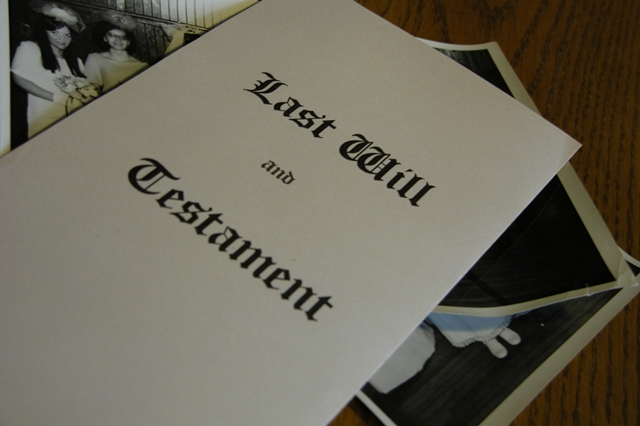
Generally, I advise clients that trusts are more appropriate, especially if the client wants his or her heirs or beneficiaries to avoid probate. Preventing an estate from going through probate is beneficial if the estate is sizable, i.e., consists of a house, life insurance, a retirement plan or securities, one or more automobiles, and furnishings. However, there are circumstances when a will may be more appropriate: If there is no will, then the property might be distributed to, or in proportions, someone unintended by the decedent. For example, your spouse might only receive 1/3 of the estate’s personal and real property and the remaining 2/3 will go to a child or relative who kicked your dog. Equally egregious is that the property could be distributed to the state, which may have already benefited from receiving several years of income and sales taxes from you. If the estate is modest, for example $100,000 – $200,000, avoiding probate is even more reasonable and it may be possible to waive a probate hearing, so a trust under these circumstances is probably unwarranted. A grantor may not want to designate a trustee and may not want to be a trustee during his or her lifetime.* So, by using a will, a sizable estate will go through probate but each legatee will ultimately be responsible for the preservation and enrichment – or diminution – of his or her own gift. If the testator has minor children and doesn’t want the court to determine guardianship in the event of death or incapacity, then a will can nominate who should be the guardian. A grantor with no desire to continually update a trust document may use a pour-over will, a simple mechanism by which all of the estate is designated to a trust. Okay, so this one is a compromise betwixt the 2 but \”4 1/2 Reasons…\” just didn\’t flow. * A settlor, also referred to as a “grantor,” is the individual who creates the trust.
Lucky Stars Unlucky Heirs: Even the Unfamous Should Have a Valid Will

Approximately 70% of Americans who should leave some sort of testamentary document or trust behind when they die don’t. Why? Because we don’t like thinking about the day when we’re no longer going to be around, let alone talking about it, and heaven forbid planning for it. So we procrastinate until we end up dead with loved ones on the cusp of committing murder or worse – battling each other in probate court until attorneys’ fees have engulfed most of the estate. I offer a few suggestions: Don’t be like Sonny Bono who died without a will and left his widow to battle with a man claiming to be Chaz’s illegitimate half-brother. If you’re married or in a civil union, try not to repeat Barry White’s mistake. “The Maestro” died not only intestate, i.e., without a will, but also without having divorced his first wife with whom he’d been estranged for decades. So if you’re going to put off the inevitable, don’t put off making your divorce or break-up legally valid. The Barry White Wars: (1) between long-time lover and mother of last child and estranged wife of about 20 years and mother of four, and (2) between his 9 children. Not that I think that many would share in the aspirations of Anna Nicole Smith, those who are reading this should consider when drafting your current estate plan that you may have another child after the plan is effectuated. So try not to accidentally disinherit the second child by leaving everything to your “only child, INSERT NAME HERE.” Finally, if you can satisfy suggestions 1 – 3 successfully, remember not to “be like Mike,” Michael Jackson, that is. If you have a trust, actually put something in it. Most know how literally indebted to the world Michael Jackson was, but if he had placed a few actual, fully-paid-for possessions in trust, the creditors would have probably been unlikely to gain access to those assets. A trust with nothing in it is invalid. Although I don’t suggest creating a bequest like the late Torontonian, Charles Millar, leaving everything to the Toronto woman who gave birth the most times in the 10 years following his death, I do suggest having something valid in place to protect your family, if not from others, then from themselves.
Embracing Online Legal Services…Toothpaste Shouldn\’t Go Back into the Tube

Welcome to The Lotus Rules, formerly known as the Shark Free Zone, the blog for my practice\’s web site. As an experienced blogger, admittedly, this first post is too long, but it\’s the first so I took license. Still, for the sake of you readers and my practice, subsequent postings will be shorter. I was going to write my inaugural piece on why most individuals should have something in place protecting their property and possessions in case they die. However, most, if not all, of the teleconferences, seminars, and webinars that I’ve recently attended were tinged with angst caused by online legal services. Inevitably, a participant would give a haughty, “We’re not afraid of you …humph!” when nothing could be further from the truth. So, the “why you should have something,” piece will make its debut next, as I now share a few observations on the brouhaha regarding online legal services. The fundamental perception underlying the online legal services debate is based on our profession’s steadfast and imprudent use of an outdated framework. The 3 sides of this frame are change aversion, fee generation, and professional egoism. Encompassed within are a myriad of factors, including risk aversion, money affection, perfectionism, and control- and structure-orientation. However, it is the bottom of this non-gendered triumvirate, our professional egoism, causing the most discord. Arguably, certain arguments opposing online services are justified, as is a certain amount of lawyer egoism. Many colleagues and I spent years of enormous effort, anxiety, sleepless nights, money we did not have, and BIG brain power to get to achieve our goal – acceptance in one of the most respected professions in the world. So, those of us who “survived” are now in an “elite” group and that has to mean something. Right? Yes, it does … within reason. The reasonable justifications for opposing online services and justifications for our egoism include: A very high standard of performance in communication and analysis, A deference and respect for those seeking our services because most folks don’t turn to an attorney unless there’s trouble afoot, A deference for and an ability to establish rules that can stand the test of time, lending stability and civility to our society, aka “precedent,” and A genuine desire to help others – not necessarily the altruistic human rights,\”let\’s save the internally displaced\” kind of help, but the “if you sign this contract as it’s written, you’ll lose your shirt” kind. However, the unreasonable justifications are what foster the profession’s debate and undergird the angst: Interpreting elite as exclusionary whereby understanding the law is our territory and online legal services are trespassing, Defining clients as those who can pay premium fees for our efforts, and Simply meaning that “we’re ‘in’ and you’re ‘out’; hence, we make the rules, hide their meanings, and change them whenever we want; and you follow the rules while we enjoy lavish lifestyles.” The reasonable justifications for opposing online legal services can be reconciled with supporting the same. However, those of us holding on to the unreasonable justifications are doing so perilously. Understanding the law is not the exclusive purview of lawyers. It is our duty to protect our clients’ rights. For us to discharge that duty, clients should at least know what their rights are, when their rights are in jeopardy, or when they\’ve been violated. Yet, lawyers don’t sit around coffee shops to see who’s writing the next “One L” and we certainly don\’t troll sweatshops calculating how long the seamstress has worked and for what amount of compensation. Ergo, clients must have some understanding of the law as it applies to them in order to seek protection or demand redress. Frankly, non-exclusivity in this context has generally been the case, so exclusivity is a meritless argument and efforts to continue hiding behind the curtain in Oz are foolhardy. Let me explain. Several decades ago, on Main Street, USA, Almost Famous Author finished \”Two L\” and told Neighbor Nikki about his manuscript, who then advised “call the Library of Congress and get it copyrighted; they’ve got the forms.” Almost Famous Author did as advised but also went to see Attorney Shingle. Attorney Shingle gave Almost Famous Author the forms at no charge, saying, “Call me if ya got any questions, and don’t worry about the fee ‘cause it won’t take long.” In fact, the visit with Shingle was free, too. Well, times changed. Main Street gentrified into Wall Street and Attorney Shingle joined BL & Associates, LLC where forms along with most visits were no longer free. Moreover, Attorney Shingle’s son also went to law school and joined BL, and so did Attorney Shingle’s grandson, and times were great for the profession. Now, times have changed again. Technology allows companies and firms to provide free or inexpensive legal forms and free information, with expeditious delivery, so that even wannabe famous writers who could afford BL are obtaining legal services online. Irrefutable is that the purveyors of the new free forms and information earn a comfortable living, but they are also doing something to offset a most egregious result of the second factor – limiting who obtains help by requiring clients to pay a premium’s premium fee. Firms embracing technology are providing access to legal services to those who needed them but often could not afford them. Technology helped unmask the rules and unlock their “hidden” meanings with “plain English.” As a result, the technology toothpaste is out of the tube, so to speak. Yet, all is not lost for lawyers and clients who prefer the traditional ways. The legal profession has a great opportunity in its impending transformation. Of course, some practice areas are too complex to lend themselves to online services, e.g., international intellectual property matters and corporate litigation. However, if lawyers in even complex areas can unbundle repetitive, redundant processes, the outcome will be greater efficiency, happier clients, more clients, and higher income without increasing fees. In contrast, some areas must change dramatically or technology will devour