
Black History Shows Us When Opinions Are Long…

Honoring Black History Month by reflecting on cases and legal actions that affect and effected Black America is consonant with being an African-American attorney and would benefit other non-African-American, attorneys, as well. So, this year’s sojourn begins with one of, if not the most, infamous case in the annals of SCOTUS jurisprudence, Dred Scott v. Sandford, 60 U.S. 19 (1856). Reading Dred Scott, I am reminded of something lawyers often give a nod to: When a court wants to come to a decision, where the law, public policy, or common, moral decency suggests an opposite decision or a decision, generally, the Opinions are long.* For example, Dred Scott is more than 160 pages (including dissents and footnotes) if you read it on a regular True-Type font at 11 points. *Sometimes, the Opinion\’s author agrees with the minority but for other reasons, will side with the majority, which also results in a lengthy, legalesy, treatise. How J. Taney wanted to be right in presenting the answer “no” to the following issue: “whether the descendants of such slaves, when they shall be emancipated, or who are born of parents who had become free before their birth, are citizens of a State in the sense in which the word \”citizen\” is used in the Constitution of the United States,” and thus, the length of his Opinion. Query: If the right to vote is a hallmark of citizenry, how long was Shelby County v. Holder, decided in 2013? Answer: Sixteen pages; just consider Shelby County an end note to Dred Scott.
The Most Important Estate Plan

As they always do, memories of the winter holiday season are quickly fading, as my email is flooded with messages about keeping resolutions, new lawyer marketing tactics, and the latest “ABCDEF… Trust” to tell clients about. (Estate Planning attorneys love our acronyms!) But there’s one memory I am determined to keep. During the “holidaze,” I catch-up with my reading for pleasure and one of the catch-up books I read was the mesmerizing, bittersweet, poignant, non-fiction narrative, “The Warmth of Other Suns” by Isabel Wilkerson. The reading resonated deeply as it retold stories about African Americans traversing from Jim Crow South to the subtle but damning discrimination of the North and West. Particularly, being just 1 generation removed from the Great Migration’s heroes and heroines who found themselves settling in Chicago, I was, like many readers, warmed when I could say my Aunt lived on the same street as Ida Mae. Reading Ms. Wilkerson’s work took me simultaneously far from and close to my practice. (And I was supposed to be on vacation!) Almost inhaling every page, grateful for not having to respond to emails, I hung my head in sympathy for George who, but for misdirected anger and lack of self-discipline, would have achieved so much more. I knew a George. And I nodded, indeed, as I travelled through the book with Dr. Foster, who ventured from the community spreading the fact that “yes, we can” to communities that dare us to try. Indeed, he understood that we, African American professionals, must not turn our backs but must reach forward to serve our community regardless of the economic gap that exists between us and our community family. Indeed, we must reach back and forward with deliberate and sometimes, an unnerving strive for perfection, even though individuals in our own community may not believe we are as skillful as those of other cultures. We hold our heads high, reaching back and marching forward because, in fact, we may be more skilled and knowledgeable because we had to (and often, still do) work twice as hard, under twice the constraints, to pay twice the costs, to receive half the pay, and when you work that hard, you learn a lot more than the average above-average student. And at the end of the holiday break, I returned to my email flood, packages of supplies, impossible calendar, and a myriad of phone messages but with a renewed and refreshed understanding about my law practice. Indeed, a legally sound financial foundation and distribution scheme is important; and equally important is the “this is how we got here and why and how some of us didn’t and why we must also never forget their journey” legacy. Much in estate planning and wealth-building is written about the elimination of family wealth by the third generation. But, just because something happened in the past, doesn’t mean it must occur again. More importantly, estate planning isn\’t just about helping gazillionaires save on taxes. Consider that children and, therefore, families often benefit from the musculature that is strengthened when elders share the trials and tribulations and exemplify the fortitude that propels the family forward. They learn lessons of perseverance, delayed gratification, and respect for self and others; they grow to enjoy working for work itself and not just for the compensation; and they become community leaders and “unsung heroes” because of this almost impervious integrity breathed into them by their parents and grandparents. They learn compassion and empathy. I often smile as our estate planning world buzzes so about how to assist families who no longer need estate tax planning as a component of their estate plans. What to do? What to do? As an African American, female, estate planning attorney, I’ve known what to do for a while: help people legally forward on their most important legacy – the family journey, the who, the how, and the why of “the dream.”
Love Knows No Discrimination… aka Marriage Equality Snakes Pt 3

In the springing steps of new love, newlyweddedness, and newborns, we become absorbed with, like my spouse likes to say, the “bubble and squeak” of it all. And as the bubbles grow fewer and the squeakiness turns to creakiness in the golden and platinum years, we start to plan our farewells and what that should look like in honor of our loving relationships. That planning is sometimes truncated by accelerated medical challenges but more often than not, the planning is executed without much challenge. Loved ones are able to celebrate the dearly departed in dignity and honor and friends and family join in the celebration and do what they can to console and uplift the grieving. That is, this is the farewell achievable for couples who resemble couples of 40 years ago. For LGBTQ couples, who are even lawfully married, post Obergefell, planning farewells is often not that easy. The heartbreaking story of Jack Zawadski and Bob Huskey illuminates this additional post-Obergefell challenge: Jack and Bob were a loving couple of more than half a century. Upon retirement, they moved from Colorado to Mississippi and were married in 2015, shortly after the Obergefell ruling. Before moving to Picayune, Mississippi, Bob was diagnosed with a cardiac condition that worsened to the point that, ultimately, during the last few years of his life, Jack became his caregiver. A year after marrying, the couple acknowledged that Bob’s death was imminent. He was eventually placed in a nursing home near the couple’s community in Picayune. So Jack could focus on his last days with Bob, John, Bob’s nephew and dear friend of the couple, took on the responsibility of searching for a funeral home that could provide services in Picayune. Services in their community meant Bob’s body would not have to be transferred far and the couple’s friends and family could focus on helping each other through the grieving period. Searching online, John found the Brewer Funeral Homes. He contacted the Funeral Home and entered into a verbal agreement with the owners, Ted and Henrietta Brewer, for their services. The parties agreed to price, logistics of signing the paperwork, transportation of the body, and disposition of remains. The Brewers told John that they just needed the nursing home to contact them when Bob died and everything would be properly handled. The funeral home’s paperwork required the signature of next of kin. Bob died and Jack signed the paperwork as surviving spouse. When the Brewers received the paperwork indicating Jack was next of kin as surviving spouse, that they would be servicing a gay couple, they absolutely refused to provide the agreed upon services. John eventually found services 90 miles away. However, Bob’s body had to be moved from the nursing home before that service was available, so another funeral home was required to be involved to “hold” the body. Furthermore, because everything was last minute and far away, friends from Picayune couldn’t attend the services. Needless to say, this is not what Jack and Bob had wanted. So Jack and John sued the funeral home, alleging Intentional Infliction of Emotional Distress, Negligent Infliction of Emotional Distress, Breach of Contract, and Negligent Misrepresentation. Unfortunately, Jack died in December of 2017 and a petition was filed to substitute John as a plaintiff. Then Masterpiece Cakeshop was decided… However, another case was decided a few days after Masterpiece Cakeshop that may have truncated its reach and another legislative attempt to undermine the rights of LGBTQ families was recently thwarted. So, more to come. For now, we hope that people realize that estate planning isn’t just about getting valid instruments in order, especially if your family doesn’t resemble the other 80% of American families. This is the third part of a series, Marriage Equality Snakes, examining jurisprudence that undermines the rights of LGBTQ couples to marry and have families. Part 1 ~ Part 2
So Like, What Is It with Using Children? AKA Snakes Pt. 2
Continuing our examination of challenges to marriage equality, let’s consider the D.C. case, Marouf v. Azar, where the issue is whether the federal government, on the basis of religious freedom, violated the Constitution by using taxpayer dollars to fund services that discriminated against lawfully married persons. Two lesbian, married couples, and federal taxpayers have challenged the federal government because part of their tax payments (actually part of all U.S. taxpayers\’ dollars) is used to fund programs that discriminate against them with respect to adoption and foster parenting. Most readers probably know by now, because of recent events, that the federal government provides care to refugee children who reach the U.S. without a parent or legal guardian; the care is provided via the Unaccompanied Refugee Minor Program. The government further provides assistance to children who arrive without a parent or legal guardian and have no legal status through the Unaccompanied Children program. Homeland Security initially seizes children in both programs and transfers them to the Office of Refugee Resettlement program (ORR), which is governed by the U.S. Health and Human Services Department (HHS). ORR then places the children in foster homes or with adoptive parents and provides other care through religious organizations such as the organization at issue in this case, the United States Conference of Catholic Bishops (USCCB). The USCCB openly denounces LGBTQ persons and families because of the organization’s religious doctrine and clearly provides this denunciation in its application for funding from the federal government. Yet, ORR provides grants comprised of taxpayer dollars to the USCCB despite the organization\’s discriminatory policy and, in so doing, violates its parent agency’s – HHS’s – grantmaking rules because HHS follows the law settled by Windsor and Obergefell. One couple, Fatma Marouf and Bryn Esplin, and filed a lawsuit based on these facts after they tried to apply for adoption through USCCB and, during a telephone interview, were denied the opportunity to continue the application process. Fatma and Bryn were told that they were unsuitable because their family did not “mirror the holy family” and thus, were unqualified to foster parent or adopt. In response to this clear discrimination by an organization funded by the federal government, as of February 2018, Fatma and Bryn are seeking redress alleged violations of their rights under the Establishment Clause, the Equal Protection Clause of the Fifth Amendment, and the Substantive Due Process Clause under the Fifth Amendment. Really…what is it with keeping children from being loved by lawfully, married couples?
The Snakes Surrounding Marriage Equality, Pt. 1
We would usually post a rainbow or something uplifting for PRIDE, but this month, we\’ll leave rainbows for the parade… Because, ironically, as we celebrate PRIDE 2018, the LGBTQ community is facing an erosion of rights established by long and hard-won battles. So, as I join the community in celebration, I also underscore the “not quite” response I gave to colleagues, who, when Obergefell v. Hodges was decided, quipped that the LGBTQ community\’s issues with respect to discrimination were primarily over. Like so many groups that continue fighting discrimination – explicit and implicit, the LGBTQ community will score one victory against the venomous discrimination snake just to see the head of another emerging from its hole. Furthermore, because several respected institutions that once stood for “justice for all” are now politicized and fractured, I recently shared analyses of the marriage equality jurisprudence post Obergefell to emphasize that discrimination against LGBTQ families and individuals is still rampant: Post Obergefell Challenges: First Amendment Constitutional Claims When I first read the Masterpiece Cakeshop pleadings, the short hairs on the back of my neck stood up. And as I presented this case the morning of June 4, lightning struck those hairs as my concerns, unfortunately were shown to be well-founded. The issue in Masterpiece Cakeshop, Inc. v. Craig and Mullins was whether an exception in Colorado law prohibiting sexual orientation discrimination could be made because of a business owner’s religious beliefs. That discrimination against customers should be illegal is a no-brainer, right? Well… Jack Phillips, owner of Masterpiece Cakeshop, refused to make cakes for LGBT couples because of his religious beliefs. LGBTQ couples filed a complaint against Phillips with the Colorado Civil Rights Commission, arguing that Phillips’s refusal to bake cakes for the LGBTQ community violated Colorado’s state law that prohibits discriminatory action based on sexual orientation. Phillips’s response was audacious: Instead of denying his actions were discriminatory, he asked that his behavior as a business owner in the marketplace be excused because his business was small and too inconsequential for the State to be concerned with. Phillips’ overall contention amounted to a legal, ‘so what?’ The couples disagreed with Phillips’s minimalist argument, responding that (1) the discriminatory action has been illegal since the 1960s; and (2) Phillips’s religious beliefs could not be allowed as a basis to create an exception because the history of intolerance based on religion illuminates the horror such unfettered intolerance has wrought. The Commission found in favor of the couples. Score one for the good guys. Phillips, of course, appealed. On appeal, the couples’ brief explained how debate has continued regarding religious beliefs and discriminatory action but the law was clear: Action such as Phillips’s was illegal in the marketplace. Also, Phillips’s contention the State’s interest was marginal was bunk because Colorado has thousands of LGBTQ residents and families, despite the fact that Colorado has a storied history with respect to its discrimination against the LGBTQ community. Yet, even setting that fact aside for the sake of argument, the additional fact that the commercial marketplace must be open to all, free of discrimination, still remains. Business owners’ religious beliefs should not determine the sales strategy of a for profit, commercial enterprise. To allow such discriminatory action would undo more than 50 years of precedence. The Colorado Appellate Court agreed. Score two for the good guys. However, one could already see the snake tracks of discrimination heading toward LGBTQ rights after the Hobby Lobby decision was announced in light of Windsor. In Burwell v. Hobby Lobby Stores Inc., the U.S. Supreme Court examined 2 for-profit, closely-held corporations’ claims that the Religious Freedom Reformation Act’s mandate to provide healthcare, including access to contraceptives, violated the corporations’ First Amendment and statutory rights to freedom of religion by forcing them to provide health insurance coverage for abortion-inducing drugs and devices, and related education and counseling. The Court, taking a bite at women’s reproductive rights – or more broadly, individual rights – ruled in favor of the corporations. The Roberts Court is becoming known for its narrowly drawn Opinions, such as the Hobby Lobby decision, addressing one part of a case, while ignoring another. So, when deliberating Masterpiece Cakeshop, the Court’s majority, as I feared, slid in discrimination, couched in religious freedom, by focusing not on the Appellate Court\’s review but on the Colorado Commission’s hearing. During the Commission’s hearing, hearing officers deliberated aloud, indicating they held a bias in favor of business persons keeping their religious feelings to themselves when serving the public in commercial settings, comments that the Court reasoned undermined Phillips’s Due Process rights. Remarkable! Phillips admitted he discriminated and so what; hearing officers rebuke this lack of respect for equality that is – or was – the law; and the U.S. Supreme Court glides past the fact that the Appellate Court’s decision was reviewed according to all the facts and law notwithstanding the Commission’s hearing, used the hearing officers’ vocal comments made in a public hearing, comments steeped in a half-century of law, to actually weaken that half-century jurisprudence. The day Masterpiece Cakeshop’s ruling was announced, legal analysts shouted over the airwaves that the decision was not very meaningful because it was decided narrowly. However, Plessy v. Ferguson was also decided on narrow grounds and has yet to be expressly overturned. Also, as Justice Harlan explained in his dissent in Plessy, the U.S. Supreme Court is the final arbiter of American law and its rulings, broad or narrow, affect laws and public policies for decades if not centuries. The majority Opinion also slipped in a state’s rights argument allowing for “outcomes for cases like this” to be decided by other courts, thereby creating a vein through which discriminatory, poisonous actions can run through our country with little impediment or cure. And so marches for equality must continue until celebrations can be fully enjoyed, without fear of snakes paralyzing equality jurisprudence. Snakes, Pt. 2 – About the Children…
Properly Caring for Great Grannies

One of my most cherished childhood memories is of my great-grandmother sitting on her single, long braid, in her rocking chair, as I patted her hand. She would quietly rock in the sun room of my grandmother’s home, her soft brown eyes staring out the window. She never said a word, which was fine with me. I was told that at one point during her life’s journey, she just stopped talking. Since my baby sister had just been born, I appreciated the solace of quiet and not speaking. So Great Granny and I would just sit in silence together and let the sun warm our faces until… I walked into the sun room one day and she was not there. Gone. Forever. In heaven. Recalling that memory from an estate planning attorney’s perspective helps me realize how very fortunate our family was. Great Granny was only mentally incapacitated, and her incapacity did not present itself in aggressive or belligerent behavior. Equally important was the fact that our family had all the resources needed to care for Great Granny 24-7. Many families who regularly reach out to our office are not so fortunate: Since those years long ago, our country has experienced economic peaks and valleys and the State of Illinois has entered an economic abyss. Thus, if an older parent becomes incapacitated today, in Illinois, and the family has limited means, the parent and, indirectly, the family will likely confront difficult circumstances, at best, unless a plan consisting of comprehensive Advanced Directives, at the very least, is in place. Often, as parents age without a plan, children will download and prepare Powers of Attorney for healthcare or finance but these documents rarely provide the protections needed to establish the kind of care aging loved ones require, especially those who may be confronting incapacity. Additionally, the way mental incapacity presents may preclude loved ones from taking the most important initial step – obtaining a mental health assessment from a doctor. So, if anyone wonders why estate planning is so critical, think of it in the following ways. Comprehensive plans, established before sundowning, prevent loved ones from: (1) starting fatal home fires; (2) causing family poverty; and (3) causing themselves and the family unnecessary trauma of other sorts. In other words, proper planning protects parents, families, and grandchildren’s cherished memories.
It’s Quite a Taxing Season…for Trusts
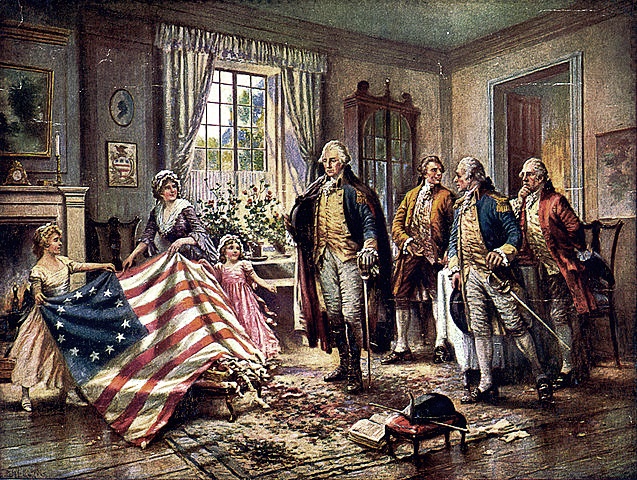
Everybody probably knows by now that in December, the Tax Cuts and Jobs Act (\”Tax Act”) was signed into law. Significant changes were made to the tax code, benefiting almost all United States citizens for at least one year and at least 1% of United States citizens for at least 7 years. In addition to the significant changes affecting individuals, the Tax Act also resulted in significant changes with respect to trust income. Before the Tax Act was signed, trust income that did not exceed $12,400 was not taxed by the Federal government. Trust income that did exceed $12,400 was taxed at the highest marginal rate, which was 39.6% in 2017. Now, with the Tax Act, the threshold has disappeared, meaning that all trust income not distributed in the year in which it was accrued is taxed at the highest marginal rate, which is now 37%. But before we get our knickers twisted, let’s parse this out a bit: Does this tax apply to all trusts? Good question. Generally, revocable living trusts are named such because the Grantor or Settlor – the person creating the trust – can change the trust whenever they want or even revoke the whole thing. Since the Grantor has this right, the assets in the trust, including all income, are considered to belong to the Grantor. So, because the assets and income belong to the Grantor, the income is generally taxed via the Grantor’s income tax return, the 1040, not an estate tax return, i.e., a 1041. Example 1 John Ross retained the firm, Hamilton & Associates to establish a revocable living trust for John, leaving his wife, Betsy, everything he owns upon his death; if Betsy dies before John, the assets will go to his nephew. John owns a house in Pennsylvania, life insurance from Lloyd’s of London, and a 49% share in Betsy’s flag-making business (Betsy’s Flags), which generates about $1,000 a year in income. After the JR Revocable Living Trust is established, John’s home is transferred to the trust because he doesn’t want Betsy to go through probate and, for some reason, he also transferred his 49% interest in Betsy’s Flags to the trust. However, the JR Revocable Living Trust is revocable and all assets still belong to John as Grantor and Trustee, so the trust pays no income tax because John pays the taxes … to the King. Example 2 John unfortunately dies while in service to his country. Upon his death, the JR Revocable Living Trust becomes irrevocable; it can’t be changed. And Betsy decides to leave John’s 49% interest in Betsy’s Flags in the trust and resigns as Trustee, letting Hamilton & Associates act as Trustee. The business is booming because several rogues, who were well acquainted with John, decided to start a war with the King and ordered a ton of flags from Betsy as a symbol of unity. So she’s quite happy with her 51% and really doesn\’t have time to administer the trust. John’s trust is now a “non-Grantor” trust because the Grantor is dead and the trust owns the assets. So any income generated by the 49% of Betsy’s Flags may be subject to the King’s income tax. Revocable Living Trust Tax 2017 2018 Income $1,000 $1,000 Federal Income Tax -0- -0- Irrevocable Trust Tax 2017 2018 Income $1,000 $1,000 Federal Income Tax -0- $ 370 Of course, one may distribute the income before the end of the year and deduct the payment from the trust’s tax return. However, scenarios exist where such distributions are neither desired nor advisable. Then what? Make sure your estate planning attorney, accountant, and financial advisor know and respect each other. Does this apply to all income? Another good question. One of the changes that the Tax Act also heralded in was a deduction for income earned by certain small businesses. Thus, the income generated by the 49% of Betsy’s Flags may actually be $296.00 instead of $370.00. What do you mean by certain small businesses? That’s a question for another article. So stay tuned…
The Supercalifragilisticexpialidocious Codicil
There we were sitting in Wills and Trusts and the prof used the phrase, “the power of the codicil.” I was struck. Why? No idea. To this day, I still love the phrase and still have no idea why. Similar to a child’s love of the phraseology of “supercalifragilisticexpialidocious.” Thus, in honor of the almighty Codicil and National Estate Planning Awareness Week, I thought it a good idea to unpack “the power of the codicil.” A Codicil (“kah-duh-sill”) is the mechanism used to change a Last Will and Testament. Consider the following scenario: A very long time ago, Molly, an independent and progressive young woman for her time, had a Last Will and Testament prepared. She was married and owned a couple of properties. Her Will left everything to her spouse and since she and her spouse had no children, Molly named her best friend, Florence,as a contingent beneficiary (or more precisely, legatee). Unfortunately, Molly and her spouse divorced and to celebrate her divorce, Molly decided to take a cruise from New York to England. Her best friend became ill and so had to stay home. During the oceanic voyage, the ship sank but Molly survived and Molly vowed to change her Will as soon as she returned home. [SIDEBAR – Had Molly died, the law would have prevented her ex-spouse from inheriting but instead of her best friend inheriting her fortune, it would have gone to her no-good nephew, Fred.] Molly’s Will was very precise and long for the day – more than 10 pages. Still, all she wanted to change were the legatees; she didn’t need a completely new Will. So… enter the Codicil. Molly’s attorney prepared 2 pages, explaining and stipulating the changes – Florence received everything and if Florence predeceased Molly, then her fortune went to the Jane Addams Hull House. Molly and 2 witnesses signed and dated the codicil and voila! All was right with the world. Her will was validly changed. Molly remarried decades ago but is now a contented widow in her twilight years with great-grandchildren. About 20 years ago one particularly geeky grandchild convinced Molly to invest in \”some contraption called \”the Google\”,” this other stock called \”Apple,\” and \”a silly online store called \”Amazon\” of all things.\” Molly\’s fortune exploded so she thought it would be a good time to change her estate plan. She intends to ensure her descendants are well-cared for and give to social justice and environmental causes. Her former lawyer has since retired, so she met with her grandchild’s lawyer and mentioned the power of the Codicil. The lawyer smiled and advised that, given her good fortune and fruitful life, an entirely new Will in addition to other planning mechanisms are in order. Molly understood and the asked if the lawyer accepted Bitcoin as payment. One may ask can a Codicil be considered a Will? For example, what if the Will was lost but the Codicil was located and, for some reason, restated everything in the Will. Because the Codicil must be prepared and signed with the same formalities as a valid Will, this Codicil would likely be considered just that – a valid Last Will and Testament. Another interesting question that occasionally pops up is what if a Testator just scratched out or added someone\’s name to the margin of the Will – what effect would those actions have on the Will? Would that deletion or addition be valid? No. Those actions are not valid unless done so contemporaneously during the signing of the Will. If done so afterward, without the formalities, the person who was scratched out will still inherit and the person added won\’t inherit a thing. After a Will has been signed, in Illinois, for those changes to be valid, one would have to execute a supercalifragilisticCodicil.
5 VIP To-Dos Before Packing the Suitcase…

According to AAA, approximately 44.2 million people were to travel the weekend before the 2017 Independence Day holiday. Still, Americans are becoming more and more transient: Not just holidays, but graduations, vacations, and family reunions beckon lots of us away from the place we call “home.” With clients who are “snow birds,” non-U.S. citizen spouses, or dual citizenship partners, our firm has a unique perspective to share with you when it comes to protecting your loved ones as you “move freely about the cabin”: Advanced Directives, aka “Powers of Attorney.” Have them. Let your agents and successor agents know you’re travelling and how to contact you, even if you climbing Machu Picchu. Financial and Health Professionals. Copy them. Make sure your banks, brokerage houses, and doctors have copies of your Advanced Directives on file. Children’s Successor Guardians. Name them. Let them know you’re traveling with or without the kids and also how to contact you. If you have kids and are climbing Picchu, carrier pigeons may be an option. Destination Hospitals, Pharmacies, and Emergency Clinics. Know their locations in reference to your accommodations and their rules on treating patients or filling prescriptions for patients outside of their jurisdiction. “Check in” upon your return. Let your \”team\” know they can relax and maybe take a vacation, too. Nobody wants to become seriously ill while on vacation. However, with the right plan in pace and information in the appropriate hands, if you do become ill while travelling, you can focus on becoming better, knowing your trusted fiduciaries have your best interests under control just as you would. Happy, Safe, & Fun Travels!
Revisiting We ALL Do…
June is PRIDE month and to celebrate…all month long, we\’re revisiting the one of the most important decisions for our friends, family, and clients in the LGBTQ community: Obergefell v. Hodges, which gave the community marriage equality. To start things off, let\’s consider the 4 \”principles and traditions\” the Supreme Court of the United States used to justify its Opinion and, thus, marriage equality: \”Individual autonomy\” encompasses the right to decide who one will marry. See Loving v. Virginia. And in case you\’re wondering, \”individual autonomy\” is legalese that underpins the Declaration of Independence, the instrument that declares individuals free to pursue happiness. The union of marriage is a fundamental right because the intimacy of the marital union is unique and depriving same-sex couples from the recognition and protection of that intimacy is wrong. Marriage equality helps protect the emotional stability of children borne or adopted into same-sex marriages, by equalizing their families with heteronormative families. Marriage is one of the bases of America\’s social and legal order. Depriving same-sex couples from enjoying the benefits of marriage, which includes social stability, would be \”demeaning. Individuals must be free to pursue happiness. That happiness can be found in the remarkable closeness of the marital union. Generally, children are the fruit of marriages and children must be protected because they represent the future. Thus, marriage is a societal bedrock in which most adult individuals must be able to participate. Sounds simple, but it took us almost 50 years to get here.